
Rain Gardens
Combining both beauty and function, rain gardens help protect water by soaking up rain and filtering dirt and pollutants before they reach lakes and rivers.
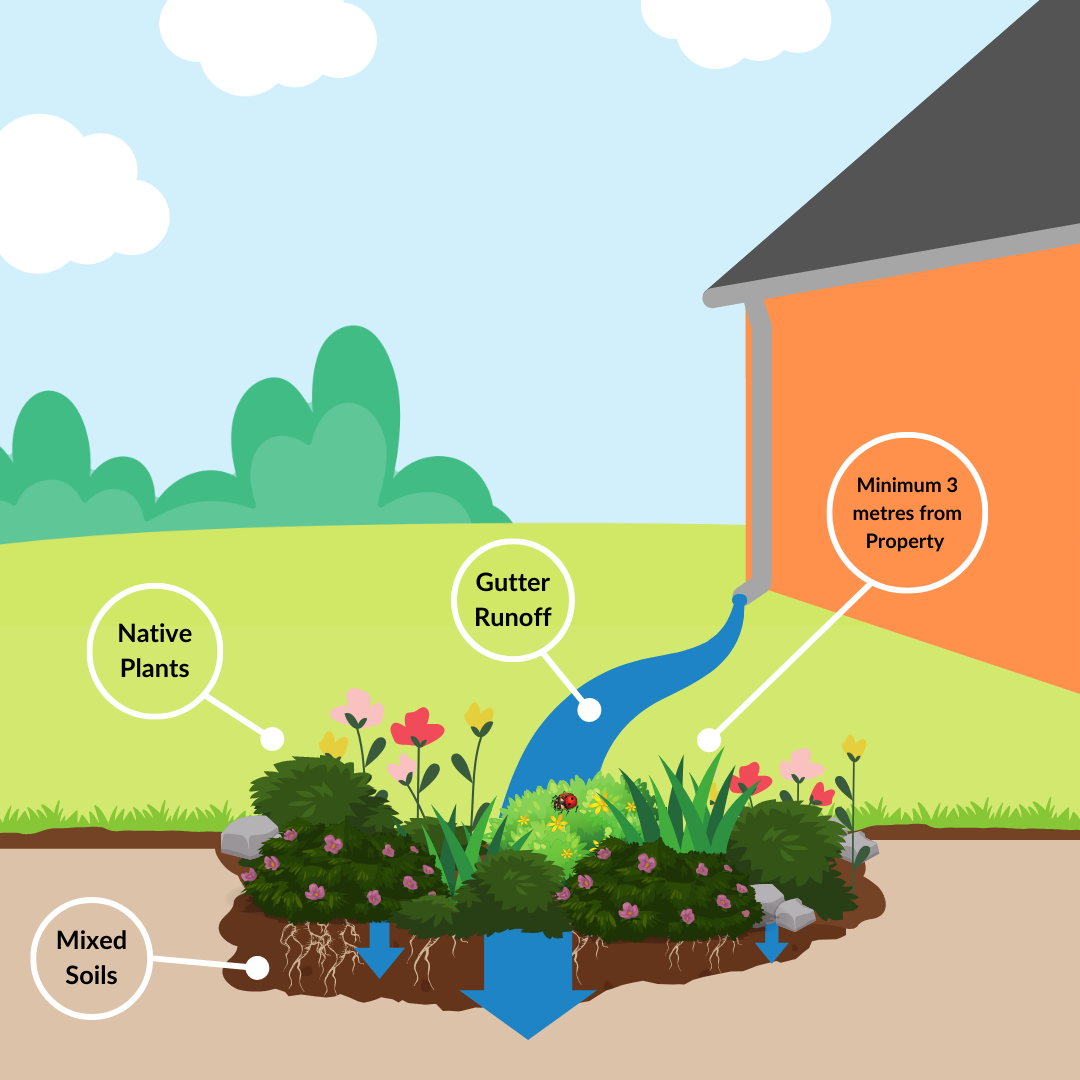
What is a Rain Garden?
A rain garden is a shallow planted area that catches rainwater from your roof, driveway, or yard. Instead of letting water run into storm drains, the garden soaks it into the ground.
How Rain Gardens Help Protect Our Water
Rain Gardens help by:
- Soaking up stormwater before it runs off
- Filtering out dirt and pollution
- Keeping polluted water out of lakes and rivers
- Helping protect drinking water sources
Where to Put a Rain Garden
Rain Gardens work best:
- In a low-lying area
- At the end of downspouts
- Where water naturally flows
- Away from building foundations
Helpful Tips
- Use native plants
- Mulch to keep soil moist
- Check after storms
- Remove weeds
Good to Know -
Rain gardens do not hold standing water. They are designed to drain naturally within a day or two after rainfall.